
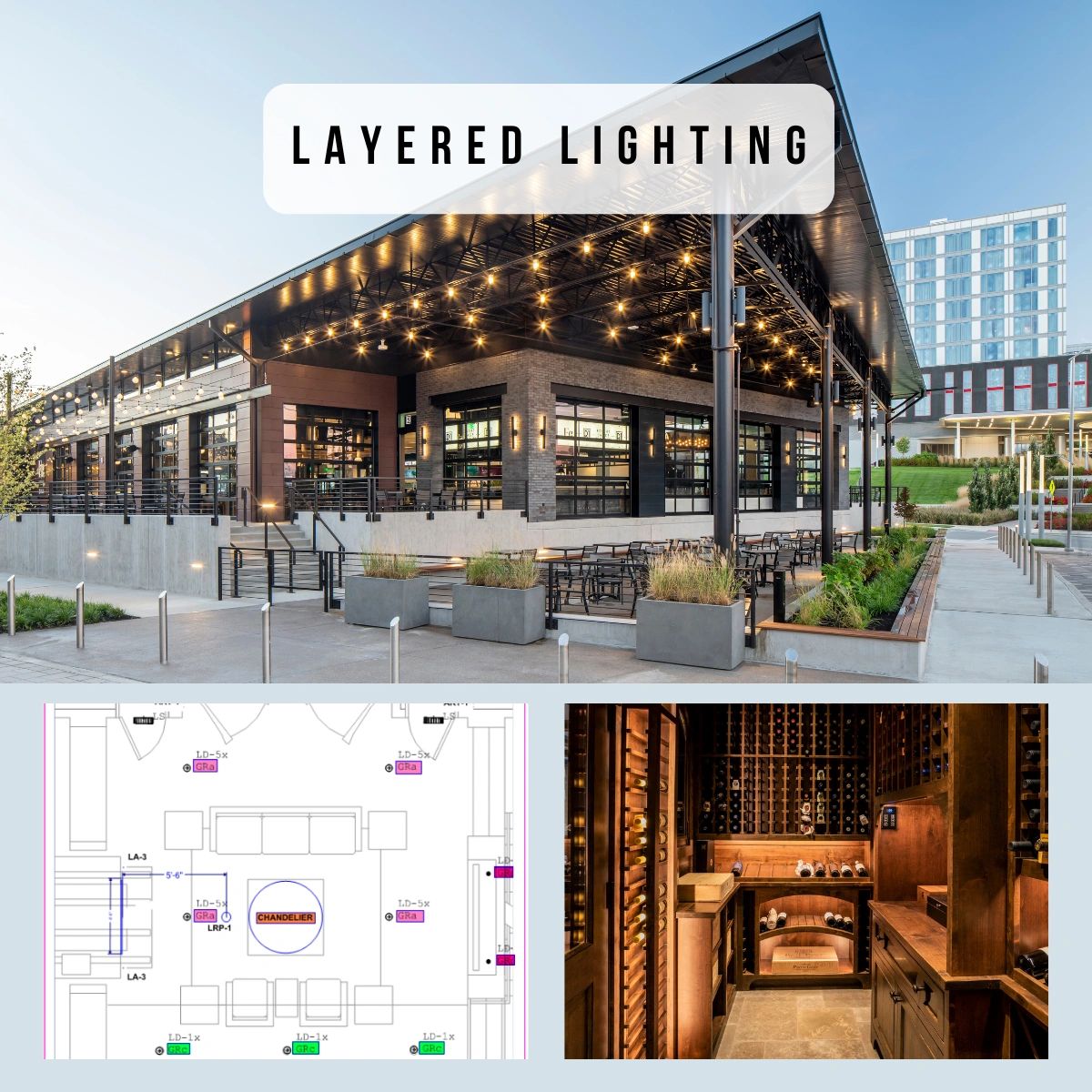
In both residential and commercial design, lighting is often seen as a final step—a simple matter of flipping a switch. But truly great spaces are never illuminated with a single, uniform source. At DHS Lighting Design, we take a layered approach to lighting, blending multiple controlled sources to create depth, comfort, and character.
What is Layered Lighting?
Layered lighting combines three essential types of illumination: ambient (overall light), task (focused light for specific activities), and accent (decorative or highlighting light). Each plays a role in shaping how a space feels and functions. By blending these layers and adding a control element, we can make a room feel bright and open or intimate and moody—always with the right balance for its purpose.
Why It Matters
Layered lighting is more than just aesthetics—it’s also about safety and usability. Research shows that well-designed, consistent lighting can improve people’s sense of safety, especially when it enhances visibility and reduces harsh contrasts or deep shadows. While this isn’t the primary reason we use a layered approach, it’s a powerful reminder that good lighting design impacts how people feel in a space.
The Details that Make the Difference
The quality of light is just as important as the quantity. CRI (color rendering index) ensures that colors look accurate, while kelvin temperature sets the tone—warm light for relaxation, cooler light for alertness. When combined with strategic placement and controllability, these technical considerations transform a space from merely “lit” to thoughtfully illuminated.
A single fixture can’t tell the full story of a space—but layered, controlled light can. It’s the intersection of science, design, and human experience. If you’re ready to see how a layered approach can change the way you experience your space, we’d love to help!